Commercial Waste Removal in Harrow for organised, compliant business clearance
Commercial waste removal in Harrow should be practical, predictable and suited to the way your business works. We handle mixed office rubbish, packaging, broken fixtures, redundant stock and other non-hazardous commercial waste with a clear focus on separation, loading and responsible disposal. If you need a regular clear-out or a one-off collection, the aim is to keep the process straightforward while helping you maintain a tidy, usable workspace.
Our service is designed for shops, offices, workshops, hospitality premises and other commercial settings that need a reliable way to move waste on without letting it build up. We can support scheduled clearances and ad hoc visits where there is a definite collection job to complete. For a broader overview of what we take, see our business waste removal page, which sits alongside the core clearance service described here.
If you are comparing options, start with a simple list of what needs removing and a rough idea of access. A short description is usually enough to begin, and you can then request a quotation once you know the scope. For a quick next step, use the enquiry details on the site and keep your notes focused on the items that are definitely part of the job.
What commercial waste removal covers
Commercial waste removal covers the collection of business rubbish that no longer has a practical use on site. That can include cardboard, general refuse, broken office items, outdated display materials and other non-hazardous materials generated through day-to-day trading. The work is about clearing the items that are ready to leave, not about re-organising your entire premises or making assumptions about what should be discarded.
Where the waste is mixed, the key question is how it can be handled efficiently and with the right separation in mind. Many businesses prefer to keep recyclable material apart from general waste, while others want everything removed in one visit and sorted afterwards. Recycling and sustainability is relevant where you want to understand how different material streams may be treated once they have been collected.
For some premises, the main decision is whether the waste can be managed as one clearance or whether it is better to divide the job into smaller sections. That is often influenced by the volume involved, the type of material and how easy it is to access the waste safely. Clear information upfront helps avoid delays, especially when bulky items, stairs or shared access areas are involved. If your requirement is time-sensitive, set out the practical constraints first and then ask for the most suitable collection option.
Office waste and workplace clear-outs

Office waste removal is often about managing the steady accumulation of items that no longer serve a day-to-day function. Desks, chairs, filing materials, packaging, redundant equipment and mixed rubbish can all take up valuable space if they are left until the end of a tenancy or refurbishment. We can support office clear-outs where the emphasis is on removing the agreed items cleanly and leaving the workspace ready for its next stage.
When a workplace is being updated, the waste stream may include both reusable fixtures and ordinary refuse. It helps to separate what is definitely staying from what is definitely leaving before the collection is arranged. If you need to plan the wider scope, the office clearance page covers the same practical theme from a more focused office perspective, while this homepage keeps the emphasis on commercial waste removal as a general service.
A useful way to approach an office job is to group the items by type and by access point. That means noting whether waste is in a rear store, an upper floor, a reception area or a loading bay, because the movement of the material is part of the work. You do not need a long brief to start, but you do need enough detail for the collection to match the site conditions and the amount of waste involved.
Bulky commercial items and specialist disposal
Some commercial clearances are dominated by bulky objects rather than loose refuse. Old furniture, damaged fixtures, tired display units, shelving and similar items may need more room to move and more care at the point of loading. We can help with this type of removal where the goods are ready to leave and the work is centred on getting them out efficiently without disrupting the rest of the premises.
If your job includes items that need particular handling, it is sensible to separate ordinary commercial waste from goods that fall into a more specific disposal route. That can include large domestic-style items used in business settings, or appliances that have reached the end of their life. You can review the related options on our furniture clearance page and, where needed, the fridge and appliance removal page for more item-specific information.
Not every clearance is made up of identical material, so a good quotation depends on recognising the mix. A site with stacked office chairs, packaging and light fixtures may be easier to handle than a location with awkward, heavy or awkwardly placed items, even if the overall volume looks similar. The more clearly you describe the material, the easier it is to match the collection to the real work involved.
Common decisions before arranging a collection

Before booking commercial waste removal, many businesses decide whether the priority is speed, access control or item separation. Those decisions shape how the collection is planned and whether extra time is needed for loading, sorting or safe movement through the building. A concise inventory is often enough to make that judgement, especially when the waste is already gathered in one place and the route out of the premises is clear.
It also helps to think about how the waste will be presented on the day. If items are bagged, boxed or stacked in a single area, the collection can often proceed more smoothly than if materials are spread across floors or mixed with stock that still needs to remain on site. If you want to compare service scope, our waste removal page provides a broad overview of the removal service, while this page stays centred on commercial use cases in Harrow.
When you request a quotation, keep the details practical. Include the type of waste, any access limitations and whether anything is especially heavy or awkward to move. That is usually enough for a fair estimate. Request a quotation once the broad outline is clear, and treat any additional notes as a way to refine the collection rather than as a separate task list.
Business waste and recurring clearances
Business waste removal can be arranged as a one-off clearance or as a recurring arrangement for premises that regularly generate disposable material. A recurring pattern may suit workplaces with a steady flow of packaging, internal paperwork, retail stock waste or back-of-house refuse. The benefit is not just convenience; it is also a more organised way of preventing waste from piling up between busy periods.
Different businesses produce different kinds of waste, so the collection plan should reflect the site rather than force it into a generic schedule. A retail unit may need more attention to cardboard and display waste, while a light industrial setting may have mixed materials that need clear separation. If disposal includes sensitive records or documents, confidential shredding is a separate and relevant option for materials that should be destroyed securely.
For some clients, the most useful part of the service is the ability to clear an agreed area without interrupting trading more than necessary. That is why it is worth identifying the times of day, access points and storage locations before the work is set in motion. A short, practical brief helps keep the removal focused and avoids unnecessary handling of items that are not part of the job.
Pricing factors and the quotation process

The price of commercial waste removal usually depends on the volume, the type of waste, the access conditions and any extra handling needed to move items safely. A job with easy access and standard mixed waste is different from one involving awkward stairs, tight corridors or a variety of items that need sorting before loading. Clear, honest information is the best starting point for an accurate quotation.
If you want to understand how costs are discussed on the site, visit pricing and quotes for the wider approach. It is helpful to think of the quotation as a match between the material to be removed and the work involved in removing it. That means size, labour and access matter, but so does whether the waste is all in one place or spread across a site.
When you are preparing an enquiry, two details are especially useful: what needs removing and how it can be reached. After that, any note about timing, loading points or special care can improve the estimate further. If you are ready to move forward, request a quotation and keep the description factual so the response reflects the actual job rather than assumptions.
Commercial premises and property types we support
Commercial waste removal is used by a wide range of premises, including offices, shops, workshops, hospitality venues and managed properties. Each site type has its own rhythm, so the waste collection needs to respect how the space is used. A clear-out after refitting a shop floor, for example, will look different from the removal of routine office waste or the clearing of materials from a back room used for storage.
The same applies to mixed-use buildings, where business waste may be held in shared spaces or collected from several floors. In those situations, the arrangement needs to be practical for the people on site as well as for the removal itself. If you need support with premises that are being emptied more fully, home clearance and flat clearance are separate services listed on the site, while the commercial page remains focused on business use.
It is usually sensible to distinguish between what is waste and what is still part of your working stock or equipment. That distinction helps prevent accidental removal of items that should remain on site and makes the quotation more reliable. The clearer the boundaries, the more efficiently the collection can be organised and completed within the agreed scope.
About Harrow
Harrow is a large district in north-west London with a long history that stretches from a former rural settlement to a modern metropolitan centre. Harrow on the Hill is one of its most recognisable historic cores, known for its elevated position, older street pattern and links with Harrow School, founded in 1572. The hill itself still gives the area a strong sense of place, with views over surrounding suburbs and a mixture of heritage buildings, shops and residential streets. Elsewhere in the borough, neighbourhoods such as Wealdstone, Kenton, Pinner and Stanmore each contribute a different character, from older village centres to more urban corridors. Harrow’s transport links have also shaped its development, especially through the Metropolitan line and London Overground connections, which have made the area a practical base for commuting and local movement. Green spaces are an important part of the district too, with sites such as Harrow Recreation Ground, Harrow Weald Common and nearby Headstone Manor & Museum offering quieter counterpoints to the busier town centres. The borough combines civic buildings, places of worship, post-war housing, shopping parades and conservation areas, creating a varied landscape rather than a single uniform townscape. That mixture of old and new is visible in the architecture: historic church towers and school buildings sit alongside high-rise residential development and modern retail frontages. Harrow also has a strong community and cultural identity, reflected in local parks, libraries, sports facilities and a range of neighbourhood centres that serve the surrounding population.
Office clearances, refurbishments and fit-out waste
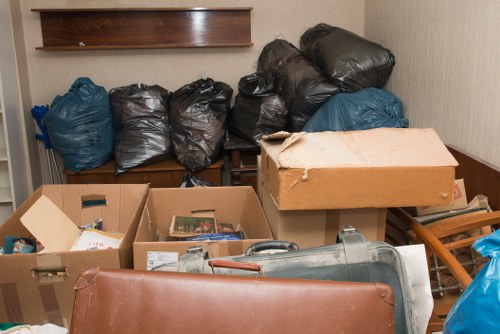
Office clearances connected to refurbishments or fit-outs often involve a combination of old fixtures, packaging, broken fittings and redundant furniture. The work needs to be organised so that the waste can be removed without interfering with the areas still being used by staff or contractors. Where a building is being updated in stages, the waste may also need to be removed in stages rather than all at once.
That is why a clear separation between retained items and waste is so useful. Once the unwanted materials are identified, the collection can be planned around the access route and the timing of the wider project. If your premises also need support with items from other parts of the building, the loft clearance and garage clearance pages may be useful for related clearance situations, though the main service here remains commercial waste removal.
Where a refurbishment produces varied waste streams, it can help to think about what is reusable, recyclable or simply ready for disposal. That does not require a long audit, but it does benefit from a few clear notes before the visit. If you are collecting several categories of waste together, request a quotation once the main groups are identified so the collection can be matched to the work involved.
Practical preparations for business collections
A business collection runs more smoothly when the items are easy to identify and the route to them is clear. You do not need to prepare the site extensively, but it helps if the waste is gathered in a sensible place and any obstacles are moved where possible. That is especially useful in active premises, where the job may need to fit around customers, staff or deliveries.
For larger jobs, a simple internal note of what stays and what goes can prevent mistakes. If several people use the same storage room or office, it is worth agreeing the boundary before the collection day so that no one is surprised by what has been removed. The same logic applies if the waste includes items from multiple departments and the collection needs to be coordinated from one main contact.
Once the job is described properly, the quote process should feel straightforward rather than administrative. The aim is to understand the waste, the setting and the access, then move on to the collection itself. If you have already gathered the relevant details, a brief enquiry is usually all that is needed to begin. Request a quotation when you are ready and let the scope do the talking.
Other useful services and related disposal routes
Some clearances sit close to commercial waste removal but are best handled as related services rather than part of the same job. That can include property clearances, bulky furniture disposal or more specific item removal where the material requires a narrower disposal route. The site includes several pages that may help you decide which option fits best, depending on the type of waste and the setting it comes from.
For example, larger household-style items from business settings may be better matched to mattress and sofa disposal or to furniture disposal if the focus is specifically on removing unwanted pieces rather than general mixed waste. If the job involves a broader emptying of a room or floor, the relevant clearance page can provide a more exact fit than a generic description alone.
The right choice often comes down to the composition of the waste and the layout of the premises. A service page that reflects the actual item type can make planning easier and the quotation more accurate. If you are unsure where to begin, use the main commercial waste removal option as the starting point, then narrow the scope once the material is clearly identified.